Appearance models
Review the shape and presentationFor visual models, identify the display surfaces, colour, texture and finish. Discuss visible layer lines and support-contact areas with the team before confirming the process and post-processing.
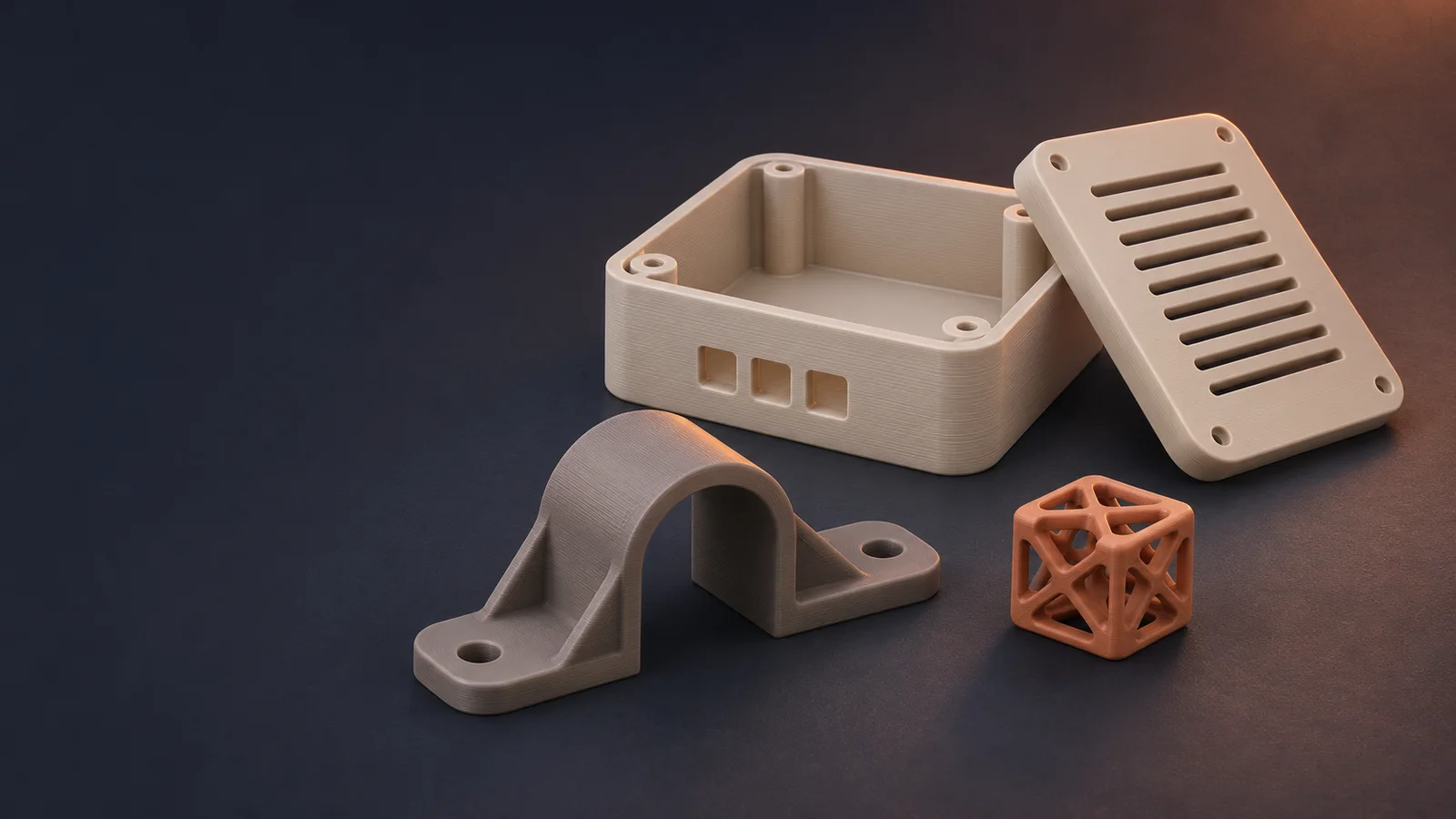
Validate form, fit and function with material and process guidance for appearance models, functional prototypes and low-volume printed parts.
SLA, SLS, MJF, FDM & metal
Appearance, fit or functional use
Post-processing, painting & finishing
The purpose of a printed part should guide its manufacturing process. An appearance model, a fit-check enclosure and a working fixture can require very different materials and finishing. PCBPit helps you discuss those trade-offs before a print is ordered.
Our service includes SLA, SLS, MJF, FDM and metal printing options, with material and printability review. Share how the part will be used, which faces matter and where it must fit other components, so the recommendation follows your application.
Describe the test or use case. A process name alone does not define the material, surface quality or performance you will receive.
A complete brief helps us review the right design and quote the full scope. If an item is still undecided, tell us what you need to achieve so we can discuss the options.
Start your enquiryA printable model is the beginning of the review. Support placement, orientation and finishing can influence surfaces and dimensions. Tell us which faces are cosmetic and which interfaces must work with other components.
Agree on acceptance requirements before ordering. For a functional prototype, define what you will test and whether you need dimensional checks or specific documentation. Material suitability and performance in your application need to be evaluated against the actual operating conditions.
A successful prototype answers a specific design question. Tell us what you need to learn from the part, then use that goal to discuss the printing process, material and finishing.
For a presentation model, identify the visible faces and expected finish. For an enclosure fit check, provide the board outline, connector locations and mating interfaces. For a working prototype, describe the loads and operating environment. If one part must serve several purposes, say which requirements take priority so the proposed material and process can be evaluated against the right objective.
Mark areas where support contact or visible build texture would interfere with appearance or assembly. Identify mating holes, sealing faces and features that need dimensional review after post-processing. Include these notes with the model rather than relying on a rendered image alone. If you require a particular build orientation, explain why so it can be considered during the printability review.
Define the checks you will perform when the prototype arrives and record any changes against its revision. Before ordering a small batch, confirm that the same material, process and finish are still appropriate. If the next step is machining, share what the printed sample established and what remains to be validated; a successful geometry check does not establish the performance of a different manufacturing process.
Send the model, quantities and the purpose of the part.
Review material, process, orientation and finishing requirements.
Confirm the specification, delivery plan and acceptance criteria.
Review the delivered prototype and capture changes for the next revision.
PCBPit lists SLA, SLS, MJF, FDM and metal printing among its service options. The appropriate route depends on geometry, material requirements, appearance and intended use. Ask the team to confirm the process for your part.
Send a 3D model with clear units and revision, quantities, intended use and material or finish requirements. Add a drawing for critical dimensions, threads or mating features that need special attention.
Yes. Describe the part’s purpose, loading, temperature and environment. The team can discuss materials and processes within the available service scope; confirm the final grade and its suitability before ordering.
They can be, when the process and material match the test. Define what you need to evaluate. A fit-check sample does not automatically reproduce the strength, surface or long-term behaviour of a later machined or moulded part.
Yes. Post-processing, painting and finishing are listed services. Identify cosmetic faces, colour expectations and dimensional interfaces so the finishing work is included in the quotation.
PCBPit supports prototypes and small-batch production. Share the required quantity and repeat-order expectations so the team can review the manufacturing route, consistency and inspection requirements.
No manufacturing process produces perfectly exact geometry. Specify the interfaces and tolerances that matter, and have the team confirm the expected result for the selected process, material and finishing route.
Geometry, quantity, material availability, build scheduling, post-processing, inspection and transit all affect delivery. Request a project-specific schedule and separate the production completion date from the date the parts reach you.
Share the application, quantity and requirements, and attach your manufacturing files. Our team will review your project and clarify the next steps.